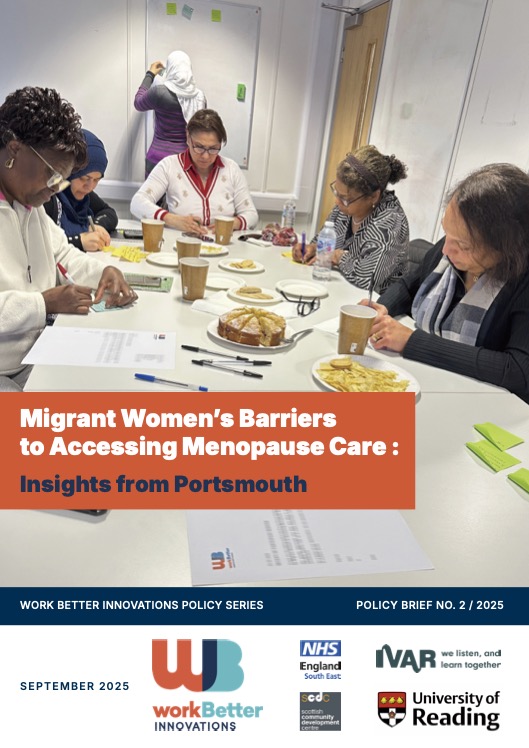
25 September 2025. WBI community participatory action research, “Migrant Women’s Barriers to Accessing Menopause Care: Insights from Portsmouth,” explores the challenges migrant women from ethnic minority backgrounds face in accessing menopause support. The findings reveal that menopause remains stigmatised, leaving many women to navigate emotional and medical isolation, misinformation, inconsistent medical advice, cultural taboos, language barriers, and low awareness of available resources.
This study is part of a programme funded by NHS England’s School of Public Health, which trains and mentors community researchers from the voluntary sector to apply Community Participatory Action Research (CPAR) in research projects. These projects aim to investigate and improve health inequalities within their own communities, shaping local and national policy.
Over the past year, our community researchers, Anita David and Fatma Tuylu, carried out 66 questionnaires, a focus group discussion, and an interview with women from nine countries, including Kenya, India, South Africa, Turkey, Egypt, Burkina Faso, Bangladesh, and El Salvador. They received training alongside other community researchers in Oxford and London, building the practical and systemic skills needed to conduct this work.
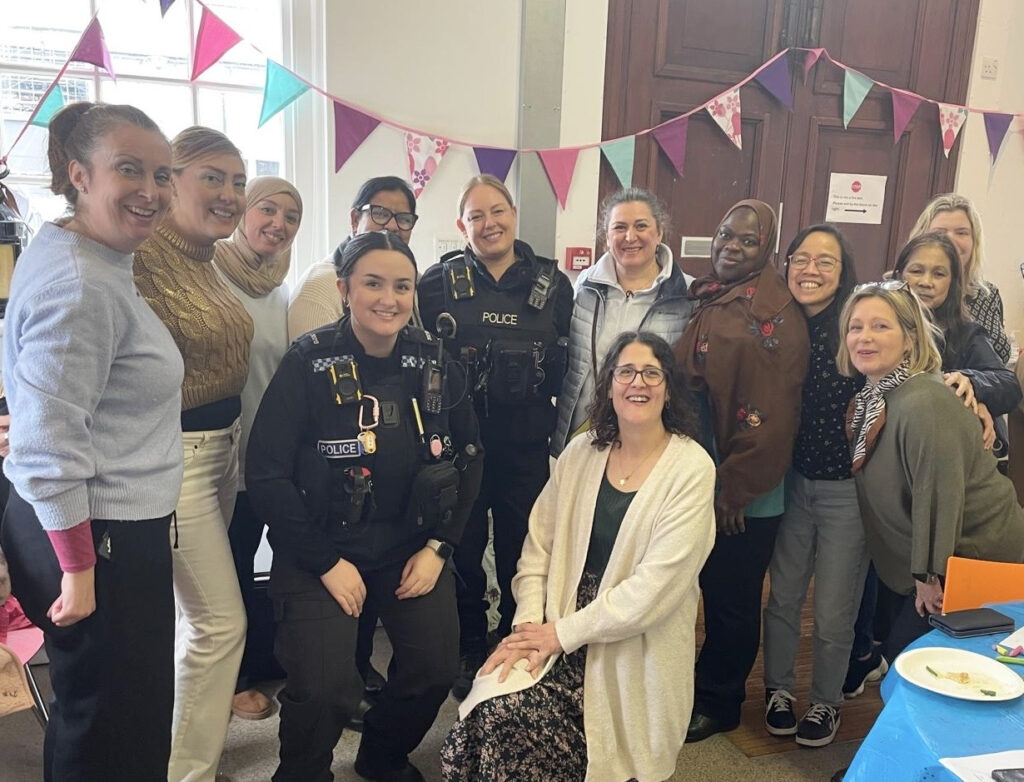
The idea of the research emerged at one of our Food with Friends in October 2024, where we hosted an information session on menopause. The conversations revealed that, while menopause is a natural stage in women’s lives, it is rarely discussed openly and adequate support is especially difficult for migrant women to access.
We wanted to understand migrant women’s experiences more deeply, because the lack of data and information directly affects how women find support and resources, which is a key factor driving the health inequalities faced by minority and migrant communities.
Everything about the female body is just taboo… I couldn’t even speak to my mother about it.”
Quote from a participant
Our research identified key barriers that prevent migrant women from seeking or accessing professional medical support for menopause that reflect both systemic shortcomings and cultural silences around menopause:
- Perceiving symptoms as insignificant
- Lack of awareness of available resources
- Assumption that previous medical advice is sufficient
- Emotional discomfort and access challenges
Based on participants’ feedback and our analysis, we highlight the need for inclusive, culturally sensitive, and language-accessible healthcare. Improvements could include:
- Language-accessible healthcare resource
- Community-based education
- Culturally sensitive service and practitioners
- Increase healthcare access through routine menopause check-ups and NHS-backed apps
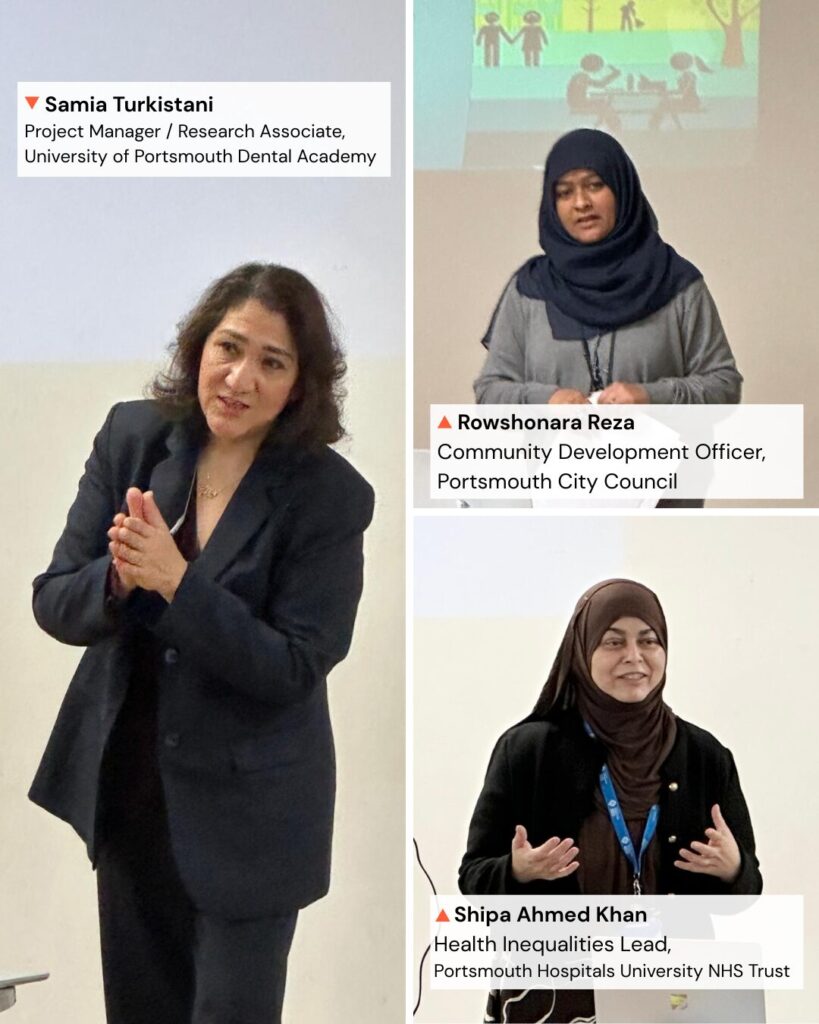
Our researchers Anita and Fatma will present their research findings and share their insights with medical practitioners and other stakeholders on 25 September in London, alongside other community researchers showcasing their work.
Read the full report here.