22 October 2025. WBI participated in the Human Rights Due Diligence (HRDD) Clinic, a regional training and exchange held in Malaysia in mid-October, with partners from Indonesia, Malaysia, the Philippines and Thailand. We shared an overview of the HRDD landscape in Taiwan, reflecting on the pressing need for official guidance to help Taiwanese businesses align with international standards.
Across Asia, the development of HRDD regulations has accelerated. Thailand is drafting a binding human rights and environmental due diligence law targeting manufacturing, wholesale, and service sectors, and South Korea reintroduced a mandatory HRDD bill earlier this year.
In contrast, Taiwan is lagging behind in formal HRDD frameworks or guidance. Taiwan’s only official document on this issue remains the first National Action Plan (NAP) on Business and Human Rights, adopted in 2020. Although the NAP was due for review and the second version was expected by the end of 2024, this has been delayed with no clear timeline.
Similarly, Taiwan’s long-awaited “Guidelines for Enterprises to Respect Human Rights in the Supply Chain” (《臺灣供應鏈企業尊重人權指引》), announced in 2024 have yet to be released.
Following the issuance of the Withhold Release Order (WRO) against Taiwan’s Giant Manufacturing last month, the government has initiated some actions, such as preparing guidance on forced labour and developing corporate HRDD training. However, there has been no public update on the next steps for the revised NAP or the Supply Chain Guidelines, both of which are essential for Taiwan’s HRDD framework and require more attention.
In a recent media interview, the Minister of Labor highlighted the growing operational risks facing Taiwanese businesses that fail to integrate labour and human rights considerations.
“More brands and importers are expected to intensify the scrutiny and improvement of labour and human rights indicators of supply chains. Businesses must change their operations and mindset,” the Minister said.
The Minister also reaffirmed the Ministry’s focus on forced labour issues, including the Zero Recruitment Fee Principle for migrant workers. However, the Minister acknowledged that many companies outsource migrant worker recruitment and management to labour agents, which limits their ability to identify and address potential forced labour risks.
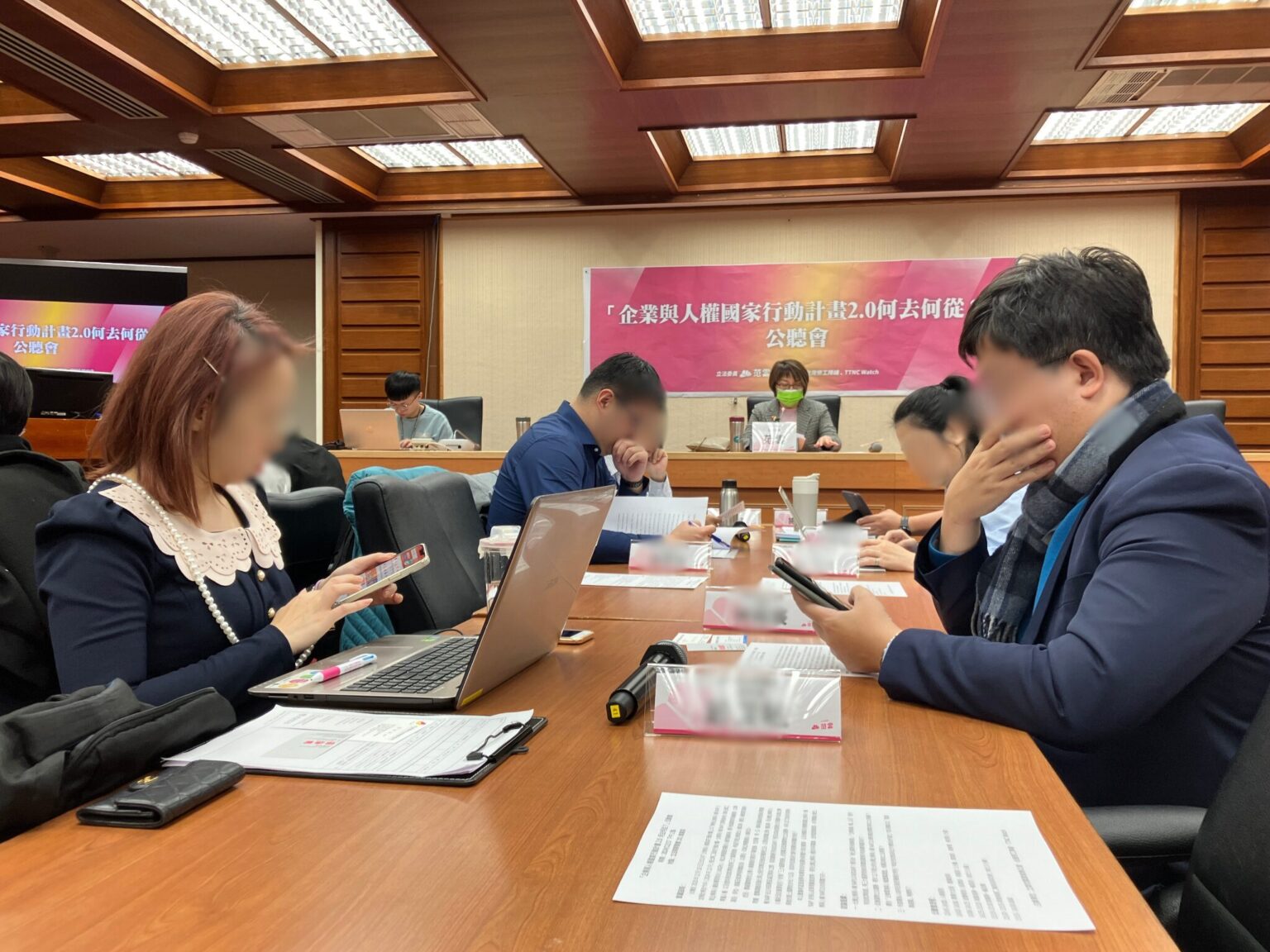
*Featured photo taken at the public hearing on Taiwan’s National Action Plan (NAP) on Business and Human Rights 2.0 in December 2024, held amid delays in the release of the second version.